

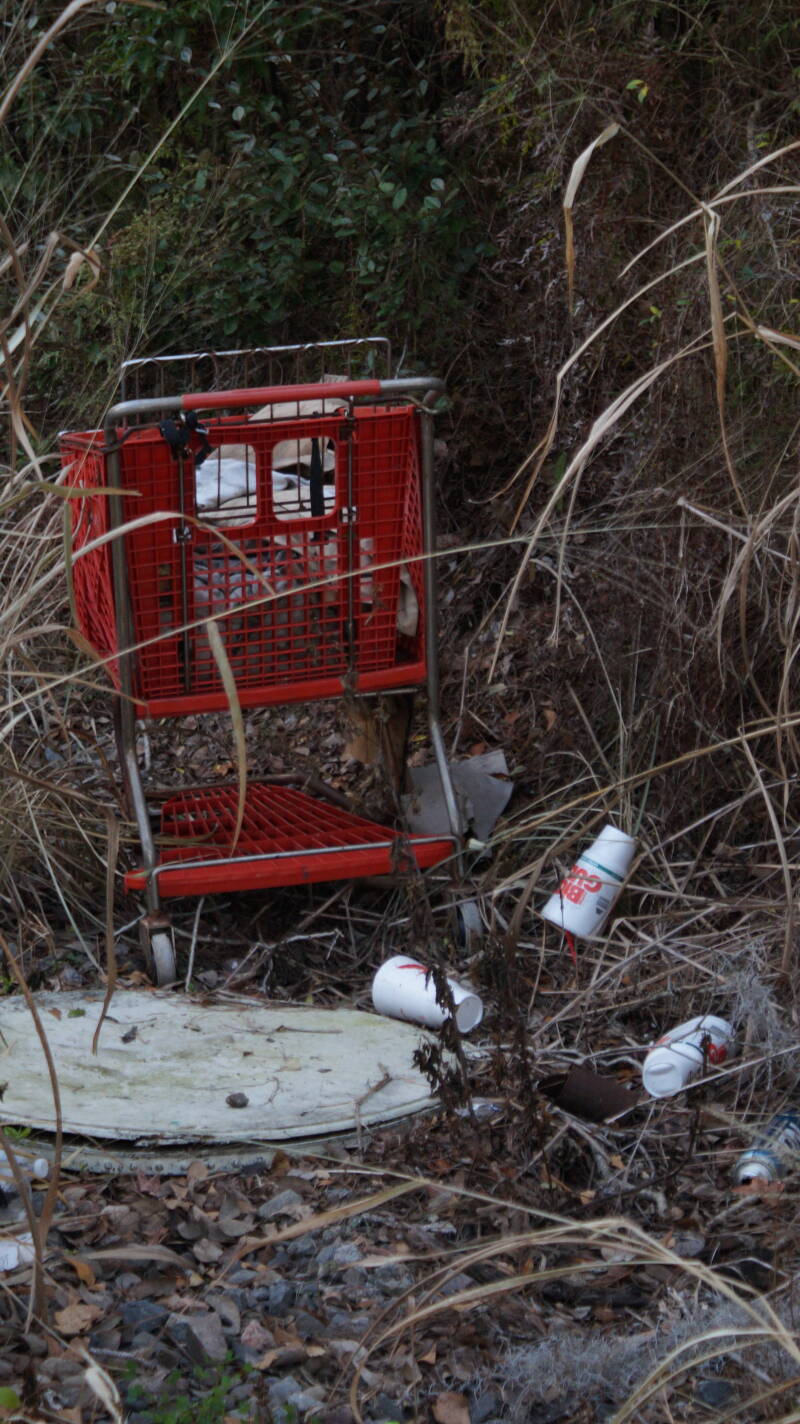
We’ve all seen the image: a shopping cart, metal mesh bulging, overflowing with a chaotic mountain of plastic bags, weathered blankets, and battered suitcases. To most of us, a shopping cart is a temporary tool of convenience—a way to ferry groceries from Aisle 4 to the trunk of a car before being nested back into a sterile row of its peers.
But for thousands of people living on the margins, that wire basket isn’t a convenience. It is their entire world. It is the box that holds the pieces of a life, a mobile fortress, and the only thing standing between them and having absolutely nothing.
When we look at a heavily loaded cart from a distance, it’s easy for the eye to categorize it as "clutter." But if you look closer, you aren't looking at a collection of trash; you’re looking at a carefully curated survival kit. Within those metal grids, every item has been weighed for its utility versus its physical weight.
Inside, you’ll often find:
-
The Bedroom: A rolled-up sleeping bag, a piece of heavy tarp, or a flattened cardboard box to provide a singular layer of insulation against the cold concrete.
-
The Kitchen: A few dented cans, a half-used plastic water bottle, and perhaps a small pot.
-
The Wardrobe: Every piece of clothing they own, often worn in layers to protect against the biting wind or stored in trash bags to keep them dry.
-
The Archives: This is the most vital part. Tucked at the bottom is often a plastic folder or a small backpack containing a birth certificate, an old ID, or the only surviving photo of a child or a parent.
Imagine for a second that your house had wheels, no locks, and had to be pushed everywhere you went. The physical toll is immense. Pushing a hundred pounds of gear through slush, over cracked pavement, or up a steep curb is a feat of sheer endurance.
But the mental toll is even heavier. There is no "off" switch when your life is in a cart. You can’t simply leave it to go into a library, a grocery store, or a government office. In the ten minutes you’re gone, someone might take the only blanket you have or a city crew might "clear" it away. To lose the cart is to lose your history and your safety in one fell swoop. This creates a state of constant vigilance that most of us will never have to understand.
"A shopping cart is a cruel paradox: it is both a lifeline and a target. It provides the mobility needed to survive, but it also marks the owner as someone the world would rather not see."
The cart makes a person hyper-visible to law enforcement and store security, yet it simultaneously makes the human being behind the handle invisible to the average passerby. We tend to see the "cart" before we see the "person." We see the "problem" before we see the "story."
It is easy to look away or to judge the "mess" parked on a sidewalk. But that cart represents a profound level of resilience. It is a testament to the human will to keep going, to keep one's belongings together, and to maintain a sense of "home" when the four walls have been stripped away.
When we see a cart full of "stuff," we are seeing a person who has refused to let go. They are carrying their entire history, their safety, and their dignity in a basket designed for milk and bread. Recognizing that weight is the first step toward empathy.

Add comment
Comments